As the Indian summer temperatures soar past 40°C, your air conditioner becomes your best friend. But what happens when that best friend starts acting up? A malfunctioning AC in the middle of a heatwave is nothing short of a nightmare. The good news is that understanding what is wrong can help you fix it faster and avoid getting scammed by unverified mechanics.
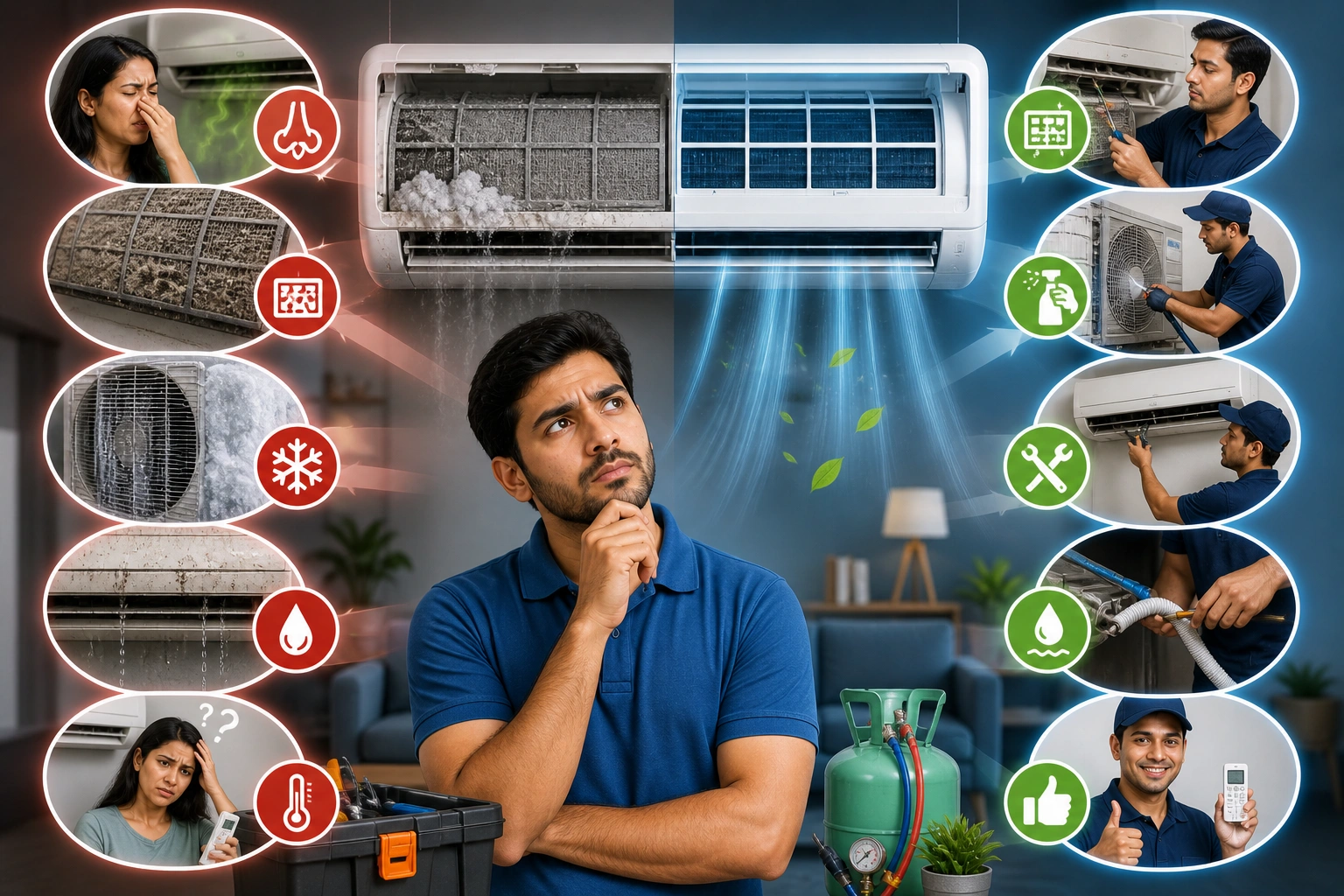
Here are the 5 most common air conditioner problems and what you can do about them.
1. The AC is Running But Not Cooling
This is arguably the most common complaint. You turn the AC on, hear the blower running, but the air coming out is just room temperature.
- The Cause: This is typically caused by heavily clogged indoor air filters, a dirty outdoor condenser coil, or low refrigerant (gas) levels.
- The Fix: Start by cleaning the removable indoor mesh filters under a tap. If that does not work, your system likely needs a professional high-pressure foam wash or a gas refill. Never let a mechanic just "top up" gas without checking for copper pipe leaks first!
2. Water Leaking Inside the Room
Nothing is more frustrating than water dripping down your freshly painted walls from the indoor AC unit.
- The Cause: When warm air hits the cold evaporator coils, condensation forms. This water is supposed to drain safely outside through a PVC pipe. If that pipe or the internal drain pan gets clogged with dirt, mold, and algae, the water backs up and leaks inside the room.
- The Fix: A technician needs to use a high-pressure jet pump to flush out the toxic sludge from the drain tray and clear the severe blockage in the drainage pipe.
3. Strange and Loud Noises
Air conditioners are designed to operate relatively quietly. If your AC starts sounding like a tractor, pay close attention.
- Rattling or Banging: Usually indicates a loose fan blade or physical debris trapped inside the outdoor condenser unit.
- Buzzing or Clicking: Often points to an electrical issue, such as a failing starting capacitor or a faulty relay switch.
- High-Pitched Hissing: This is a major red flag indicating a high-pressure refrigerant gas leak. Turn off the AC immediately.
4. The AC Turns On and Off Frequently (Short Cycling)
If your AC runs for 5 minutes, shuts down, and then restarts again, it is "short cycling". This consumes massive amounts of electricity and slowly destroys the compressor.
- The Cause: This happens when the compressor overheats (due to a completely blocked outdoor unit) and trips to save itself. It can also be caused by a faulty thermostat sensor that is misreading the room temperature.
- The Fix: Ensure the outdoor unit has enough breathing room and isn't blocked by plants or debris. If the outdoor unit is clean, a technician will need to check the PCB and thermostat sensors.
5. Foul Smells (The "Dirty Sock" Syndrome)
Turning on your AC only to be greeted by a musty, stale, or foul odor ruins the entire cooling experience.
- The Cause: Because the inside of an AC is dark and damp, it is the perfect breeding ground for black mold, mildew, and bacteria.
- The Fix: You need a professional Wet Service. A verified technician will use specialized anti-bacterial foaming chemicals and a jet spray to completely sanitize the cooling coils and blower fan, restoring fresh, healthy air.
"Routine maintenance is always cheaper than emergency repairs. Getting your AC serviced before the peak summer hits can extend the life of your compressor by years."
When to Call a Professional?
While washing the basic indoor mesh filters is a great DIY task, dealing with pressurized refrigerants, starting capacitors, and motherboards (PCBs) is highly dangerous. If your AC is facing any of the serious issues above, book a Mistryo Verified Professional today. Our experts provide transparent, zero-commission services right at your doorstep.
.webp)
.webp)